The Ultimate Guide to Progressive Glasses
The Ultimate Guide to Progressive Glasses
Are you finding yourself holding menus at arm's length or struggling to read your phone? This common vision change, known as presbyopia, is precisely what modern progressives glasses are designed to solve. They offer a seamless, all-in-one solution with no distracting lines, providing crystal-clear vision at any distance. To end your struggle with blurry vision, the best step is to explore a wide selection of customizable progressives glasses and discover how this advanced technology can be tailored to your precise needs.
【What Are Progressive Glasses, Anyway?】
If you've found yourself holding menus at arm's length or struggling to read your phone, you've likely encountered the first signs of a very common vision change. This is where progressive glasses enter the picture, offering a modern, seamless solution to a problem that affects millions.
The End of Blurry Vision After 40: Understanding Presbyopia with Progressive Glasses
Presbyopia is a natural part of the aging process that typically begins around age 40. It's not a disease, but rather a gradual loss of your eyes' ability to focus on nearby objects. For many, this change marks the first time they need vision correction for reading.
What is Presbyopia? A Natural Part of Aging
As we age, the natural lens inside our eye becomes less flexible. This hardening makes it difficult for the eye to change shape to focus light from close-up objects onto the retina. The result is blurry near vision, forcing you to push things further away to see them clearly.
Data Insight: Vision Correction After 40
This shift in vision is a primary reason why people seek new eyewear solutions. In fact, according to 2025 industry data, roughly half of all contact lens wearers stop using them by age 50. This is often due to the onset of presbyopia and the need for a better way to manage both distance and reading vision.
Beyond Bifocals: Introducing No-Line Multifocal Glasses
For decades, bifocals were the standard solution for presbyopia. However, they come with visible lines and abrupt visual shifts. Today, no-line multifocal glasses, also known as progressive lenses, provide a superior alternative.
Varifocal Lenses Explained
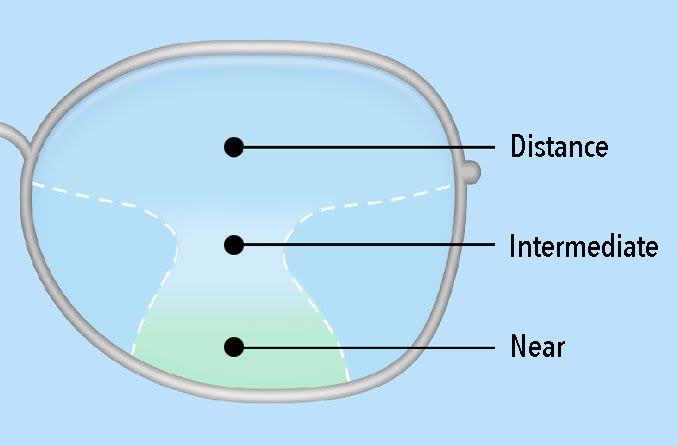
Think of a varifocal lens as three prescriptions blended seamlessly into one.
* Top Zone: Corrects for distance vision (e.g., driving, watching a movie).
* Middle Zone: An intermediate corridor for mid-range vision (e.g., computer screens, car dashboard).
* Bottom Zone: Provides power for near vision (e.g., reading a book or smartphone).
This single lens allows for a smooth, natural transition between all viewing distances, simply by adjusting your head position slightly.
The Advantage of Progressive Glasses Over Traditional Bifocals
The most significant benefit of progressive glasses is the elimination of the distracting "image jump" found in bifocals and trifocals. There are no lines bisecting the lens, which means your vision flows smoothly from far to near. This also creates a more modern, youthful appearance without the tell-tale lines of traditional multifocals.
If you're ready to experience clear vision at every distance without the drawbacks of old-fashioned bifocals, the next step is finding a pair that suits your needs. Exploring the range of available options will help you understand how this advanced technology fits into different frame styles. To find a pair that can be customized with your unique prescription, browse a wide selection of modern progressive glasses.
【The Magic Behind The Lens: How Progressive Glasses Work】
Understanding the technology inside your lenses is key to appreciating the clarity and comfort they provide. Modern progressive glasses are not just simple pieces of curved glass; they are marvels of optical engineering designed for how we live and see today.
Decoding the Latest Progressive Lens Technology
The evolution of varifocal lenses has been rapid, moving far beyond basic designs. The latest advancements focus on creating a wider, more natural field of view with minimal distortion, making the transition to progressives smoother than ever.
How Do Progressive Lenses Work?
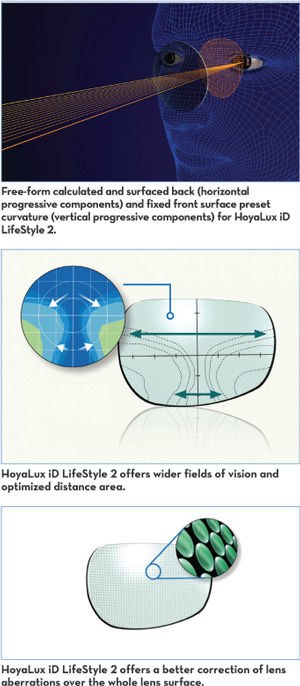
At the heart of the most advanced progressive lenses in 2025 is an Integrated Dual Surface (iD) design. This sophisticated manufacturing process represents a significant leap forward from older lens technology.
The iD Design Explained
The iD design works by splitting the complex optical requirements of a progressive lens between its front and back surfaces. The front surface is optimized to manage the power progression from your distance to your near prescription. The back surface is then digitally surfaced to reduce unwanted distortions and widen the corridors of vision. This separation maximizes your clear field of view, especially for intermediate and close-up tasks.
The Impact of Digital Surfaced Lenses
The goal of modern lens design is simple: create a visual experience that feels as natural as uncorrected sight. Digital surfacing and other related technologies are making that a reality.
Reducing Distortion in Progressive Lenses
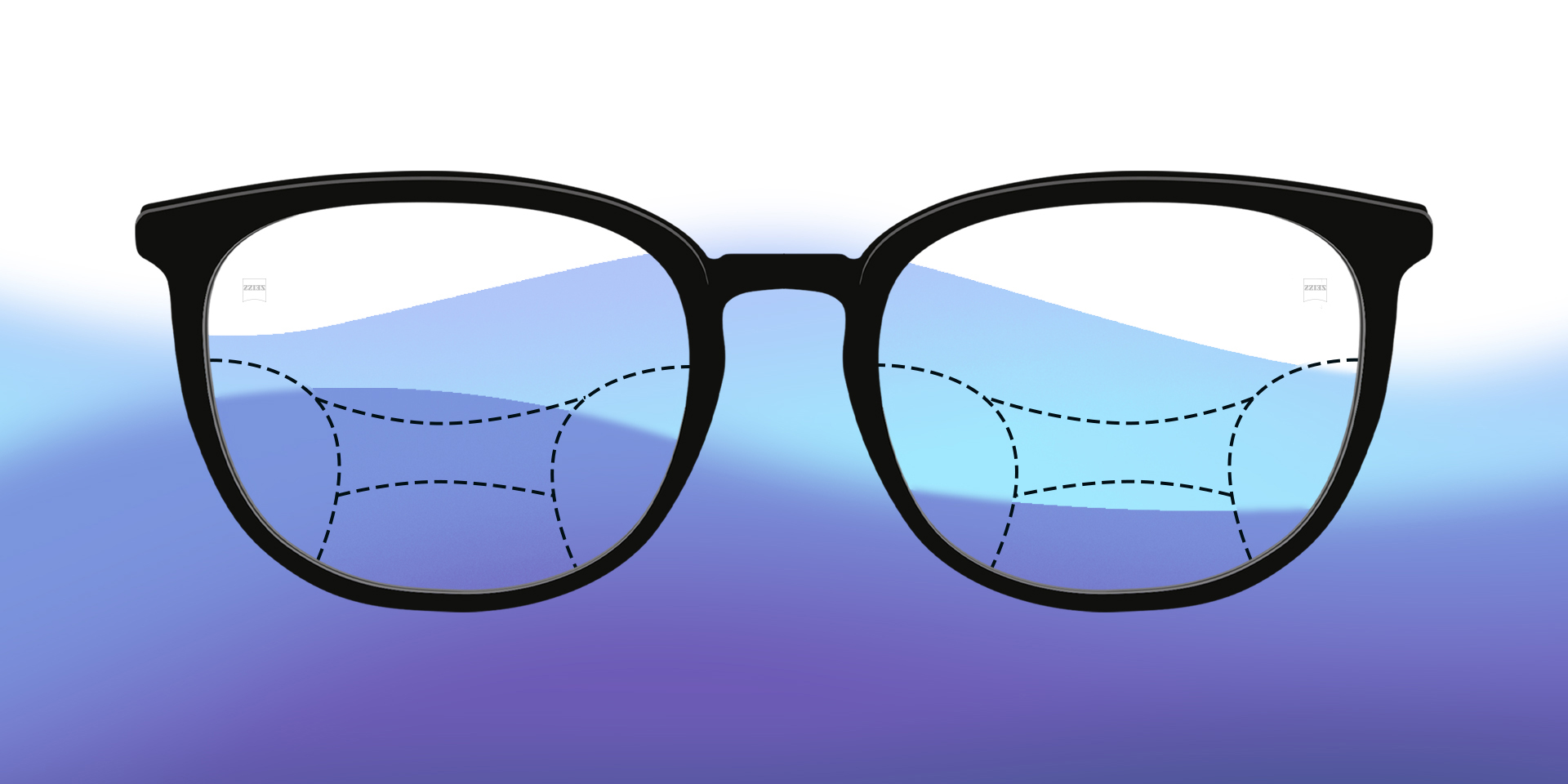
One of the most common complaints with older progressive lenses was the peripheral "swim" or blurriness. New AdaptEase Technology directly addresses this by significantly reducing peripheral astigmatic distortion. This makes for a more stable image when you turn your head, drastically shortening the adaptation period for new wearers.
Achieving a Stable Visual Experience
Your brain combines the input from both eyes to create a single, three-dimensional image. Advanced 3D Binocular Vision technology ensures that the designs of your left and right lenses are perfectly harmonized. This process creates exceptionally balanced images, leading to a more comfortable and stable visual experience with less eye strain.
Understanding this technology is the first step, but seeing how it can be tailored to your specific vision needs is what truly makes a difference. To find a pair that incorporates these cutting-edge features, you can explore a curated selection of customizable progressive glasses.
【Progressive Lenses Pros and Cons: The Honest Truth】
When considering a new type of eyewear, it's essential to weigh the advantages against the potential challenges. Progressive glasses offer a sophisticated solution for presbyopia, but understanding both sides of the coin ensures you make an informed decision that's right for your vision and lifestyle.
Major Benefits: Why You'll Love Them
The advantages of modern progressive lenses are significant, providing a combination of seamless visual performance and aesthetic appeal that older multifocal designs can't match.
Seamless Vision at Every Distance
With progressive glasses, you get a smooth, uninterrupted transition of lens power. You can look up to see a street sign clearly, glance at your dashboard at an intermediate distance, and then look down to read a text message, all without any visual jumps or lines.
These no-line bifocals deliver a more natural viewing experience. There are no distracting lines breaking up your field of view, allowing your eyes to move smoothly between different focal points, just as they would with natural, uncorrected vision.
Superior Aesthetics and Function
A major draw of progressive lenses is their appearance. Unlike lined bifocals or trifocals that can signal a wearer's age, progressives are completely seamless. They look just like single-vision glasses, offering a clean, modern, and youthful aesthetic.
This means you don't have to compromise. You get the powerful, all-in-one function of a multifocal lens that corrects vision at every distance, but with the superior look of a standard pair of glasses.
Addressing Common Problems with Progressive Glasses
It's also important to be aware of the common hurdles some people face, especially since the latest technology directly addresses these very issues.
The Adaptation Period Challenge
For some new wearers, there is an adjustment phase. During this adaptation period, it's possible to notice some blurriness in your peripheral vision or feel a slight "swaying" sensation when you move your head quickly.
This experience is your brain learning to coordinate with the different vision zones in the new lenses. While it used to be a more significant concern, this challenge is much less of an issue with today's advanced varifocals.
How New Tech Solves Adaptation Issues
The latest advancements in lens design for 2025 have dramatically reduced these adaptation problems. Clinical data on the newest lens technologies shows how effective these improvements are for new wearers.
Users of these modern progressive lenses report a much smoother transition. The data reveals:
- 56% reported faster adaptation to their new lenses.
- 61% experienced less of the "swaying" sensation while wearing their glasses.
These statistics confirm that the primary historical drawbacks are being effectively engineered out of the lenses. By choosing a pair with the latest technology, you can minimize the adaptation period and enjoy comfortable vision almost immediately. To find a pair incorporating these easier-to-wear designs, which directly solves the adaptation challenge, browse this selection of high-tech progressive glasses.
【How to Choose Progressive Lenses for Your Life】

Not all progressive lenses are created equal. The best pair for you isn't just about your prescription; it's about your daily life. In 2025, advanced customization means your glasses can be precisely engineered to match your unique activities, visual habits, and even the differences between your two eyes.
It's All About You: The Power of Personalized Progressive Lenses
True visual comfort comes from a lens that understands you. Modern technology moves beyond a one-size-fits-all approach, using detailed information about your lifestyle to create a truly bespoke visual experience.
Tailoring Lenses to Your Lifestyle
Top-tier lens manufacturers now use sophisticated tools to help design your perfect progressive glasses. Questionnaires, such as the MyStyle iDentifier, analyze your daily routine, asking about your profession, hobbies, and digital device usage.
This data helps build a personal profile. Are you a writer who spends hours at a laptop? Or a teacher who needs to see the whiteboard and a student's paper clearly? Your answers directly influence the lens design, ensuring the viewing zones are optimized for the distances you use most often.
Balancing Your Vision with Binocular Harmonization Technology
It’s very common for your right and left eyes to have different prescriptions. Binocular Harmonization Technology is a groundbreaking feature that accounts for this difference. It ensures the progressive corridors in each lens work together perfectly.
This synchronization balances the performance for both eyes, resulting in less eye strain, better depth perception, and a more effortless, natural visual experience. Your brain doesn't have to work as hard to merge two slightly different images, making adaptation quicker and all-day wear more comfortable. To find a pair that incorporates these advanced personalization features, which directly solves the need for a tailored fit, you can explore a wide variety of personalized progressive lenses.
Finding the Best Progressive Lenses for Computer Users
Digital screen use is a primary consideration for most wearers today. Because of this, specialized lens profiles have been developed to combat digital eye strain and provide crystal-clear vision for screen-heavy tasks.
The "Detail" Profile for Close-Work Focus
If your job or hobby involves sustained focus on near and intermediate tasks, the "Detail" profile is for you. This lens design provides an expanded area for close-up and arm's-length vision.
It is the ideal choice for IT professionals, mechanics, accountants, artists, and crafters. It reduces the need to tilt your head to find the "sweet spot," allowing for a more comfortable and ergonomic posture during long periods of concentration.
The "Modern" Profile for General Use
For those who need a versatile, all-around solution, the "Modern" profile is a perfect fit. It is designed for today's dynamic lifestyles, where you might switch rapidly between your smartphone, your computer, and looking up to talk to someone.
This profile provides a balanced distribution of power across all viewing distances, making it a fantastic choice if you don't have one specific viewing distance that dominates your day. It’s a high-performance, multipurpose lens for the modern world.
Understanding Occupational Progressive Lenses
Sometimes, a general-purpose progressive isn't enough for the specific demands of your job. That's where occupational progressive lenses, also known as "office glasses," come in. These are second pairs of glasses designed specifically for your work environment.
The "Space" Design for Active Office Environments
The "Space" design is perfect for people who are active within an office setting. Think of managers who walk around, talk to colleagues, and also work at a computer. This lens prioritizes intermediate vision, giving you clear sight up to about 10-13 feet.
You can comfortably see your monitor and a colleague across the room without any visual strain, making it ideal for collaborative and dynamic workspaces.
The "Screen" and "Zoom" Designs for Desk Work
For those who are primarily desk-bound, there are even more specialized options. The "Screen" design is optimized for users with dual or large computer monitors, offering an extra-wide intermediate zone to minimize head movement.
The "Zoom" design provides the widest possible near-vision area, making it the ultimate lens for intensive laptop work, reading printed documents, or engaging in detailed hobbies. It offers an incredibly spacious and comfortable reading zone. By matching your daily tasks to one of these specific designs, you ensure maximum visual comfort and productivity. Discovering which of these specialized varifocals fits your job can be a game-changer, and you can solve your workplace vision needs by browsing through these occupational progressive glasses.
【Alternatives & Key Questions About Progressive Glasses】
When exploring vision correction for presbyopia, you'll encounter several options. Understanding the key differences between progressive lenses, bifocals, and multifocal contacts is crucial for making an informed decision that suits your vision and lifestyle.
Progressive Lenses vs Bifocals: What’s the Real Difference?
The primary distinction between these two classic solutions lies in how they transition between different focusing powers. This difference significantly impacts your visual comfort and experience.
The Visual Jump of Bifocals
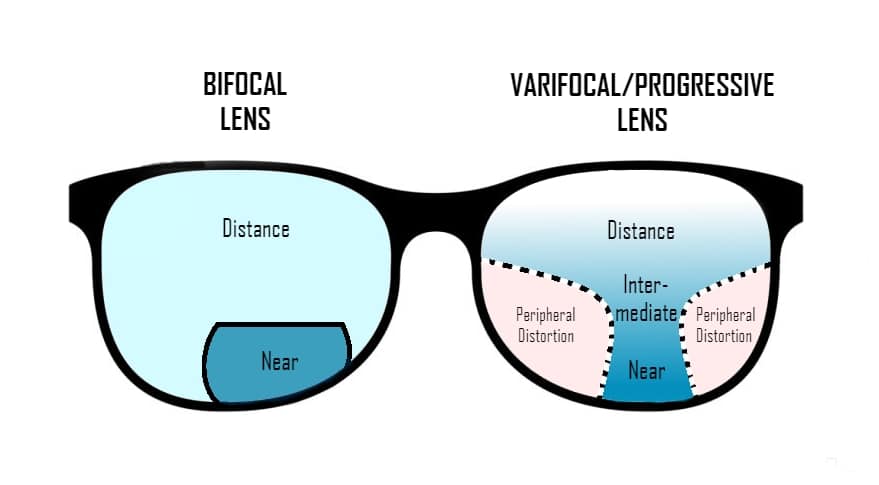
Bifocal lenses are designed with two separate, distinct power zones. A visible line separates the main part of the lens (for distance vision) from the lower segment (for near vision).
When your gaze crosses this line, you experience an abrupt "image jump." This sudden change can be disorienting and feel unnatural, requiring a period of adaptation.
The Smooth Gradient of Progressives
Progressive lenses, or no-line bifocals, eliminate this visual jump entirely. They feature a seamless, gradual transition of power from the top of the lens (distance) through the middle (intermediate) to the bottom (near).
This smooth gradient design mimics natural human vision, providing a more comfortable and intuitive experience without any distracting lines. Comparing the two, the advanced technology of progressive glasses offers a superior visual solution. If you're seeking to avoid the jarring image jump of bifocals, exploring a collection of modern seamless progressive lenses is the perfect next step to solve that specific visual problem.
Multifocal Contacts vs Progressive Glasses: Which is Right for You?
The choice between contacts and glasses is highly personal, with each offering unique advantages for correcting presbyopia.
The Case for Multifocal Contact Lenses
Multifocal contacts are an excellent choice for those who lead an active lifestyle or simply prefer not to wear glasses. They provide freedom from frames and offer unobstructed peripheral vision, which is a major benefit for sports.
Additionally, contact lenses don't fog up when wearing a mask or moving between different temperatures, and they won't slip down your nose.
The Case for Progressive Glasses
Progressive glasses offer unmatched simplicity and access to the most advanced lens technology. There is no daily cleaning or care routine required; you simply put them on and go.
Furthermore, glasses allow for the highest degree of customization, including the specialized occupational designs and Binocular Harmonization Technology discussed earlier, ensuring your vision is perfectly optimized for your specific daily tasks.
What is the Progressive Lens Corridor Length?
A key technical aspect of a good progressive lens fit is the corridor length, a term your optician will use when matching your lenses to your frames.
The Corridor Explained
The "corridor" is the vertical channel running down the center of the progressive lens. This narrow zone contains the gradual power transition from your distance prescription at the top to your full reading power at the bottom.
It's within this corridor that your intermediate vision—for things like computer screens or car dashboards—is located.
Why Corridor Length Matters
The length of this corridor must be precisely matched to the size and shape of your chosen glasses frame. A frame that is too short might cut off the bottom of the corridor, compromising your reading area.
In 2025, leading lens manufacturers provide multiple corridor length options (some offer up to six distinct lengths) for a single lens design. This allows your optician to ensure a perfect fit, maximizing the usable area of the lens and providing a comfortable, effective visual field no matter which frame style you select.
【Your Path to Seamless Vision with Progressive Glasses】
In summary, navigating the world of vision correction after 40 doesn't have to be complicated. Progressives glasses stand out as the premier solution for presbyopia, offering a sophisticated and modern alternative to traditional bifocals. The core advantage lies in their seamless, no-line design, which provides a natural, uninterrupted transition between distant, intermediate, and near vision. This eliminates the disorienting 'image jump' associated with older multifocal lenses and offers a more youthful aesthetic.
Furthermore, technological advancements in 2025 have fundamentally transformed the wearer's experience. Innovations like Integrated Dual Surface (iD) design and Binocular Harmonization Technology work in tandem to create wider fields of view, reduce peripheral distortion, and ensure both eyes work together effortlessly. This has dramatically shortened the adaptation period that was once a common concern, making the switch to progressives smoother and faster for new users.
Finally, the power of personalization cannot be overstated. From lifestyle-based profiles like 'Detail' and 'Modern' to highly specialized occupational lenses for office environments, your glasses can be precisely tailored to your daily activities. By considering your unique visual demands, you can achieve unparalleled comfort and clarity. Making an informed choice by weighing the significant benefits against the now-minimal challenges will lead you to a visual solution that enhances every aspect of your life.
``` MjAyNTA3MjYxOTQ4MDQ 当前显示MjAyNTA3MjYxOTQ4MDQ。


Comments
Post a Comment